
How To Get Rid Of A Wasp Nest In A Gutter (Easy Guide)
Finding a wasp nest tucked into your rain gutter is one of those things that instantly raises your stress level.
You’re just trying to take out the trash or water the plants, and suddenly there’s buzzing overhead and that uneasy feeling that you’re one wrong move away from a sting.
The good news is that most gutter wasp nests can be removed safely by yourself.
In this post, we’ll show you how to get rid of a wasp nest in a rain gutter like a PRO.
#1 Figure Out The Risk Level
Before grabbing spray or climbing a ladder, take a breath and look at what you’re dealing with.
A small nest, something about the size of a golf ball or tennis ball, usually means fewer wasps and a lower risk. These are often paper wasps starting a new home.
Bigger nests, especially ones that have been growing for weeks, can hold dozens of wasps that won’t appreciate being disturbed.
Pay attention to activity too.
If you see constant traffic in and out of the gutter all day long, that nest is well established. Add height into the mix, like second-story gutters, and the danger goes up fast.
If you’ve had bad reactions to stings before, this is also the moment to be honest with yourself and skip the DIY route.
Also Read: Gutters Overflowing But Not Clogged
#2 Pick The Right Time
Timing is everything with wasps, and this part matters more than most people think.
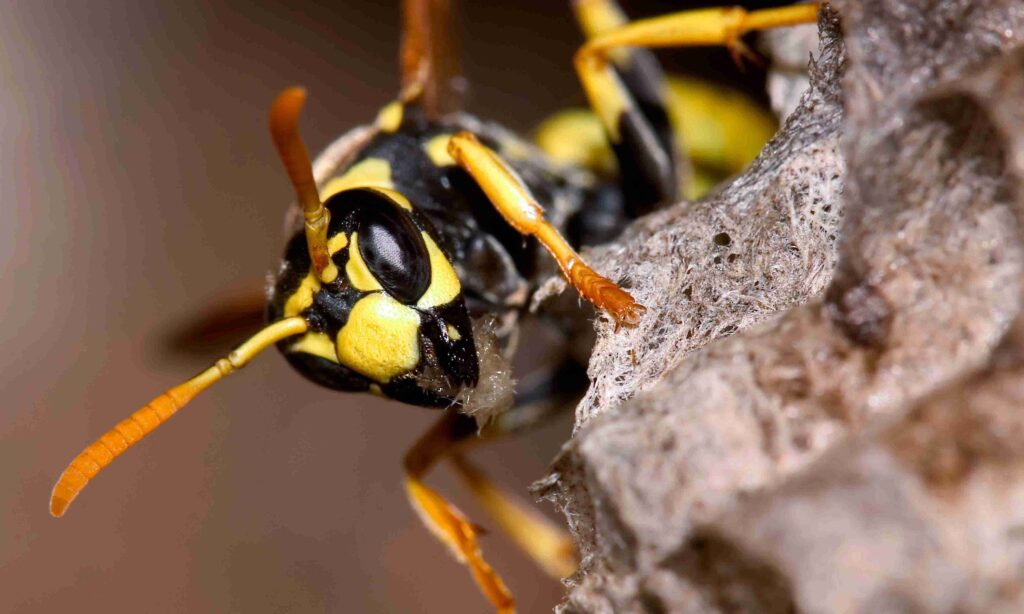
Early morning or late evening is the best time to remove a wasp nest in the gutter. At those times, temperatures are cooler and most of the wasps are back inside the nest resting.
Fewer flyers means fewer surprises.
Midday removal, on the other hand, is chaos. Wasps are active, alert, and already annoyed by the heat.
Choose a calm day with little wind. Strong breezes can blow spray off target or knock you off balance on a ladder, which is the last thing you want.
Waiting for the right moment might feel inconvenient, but it makes the entire job smoother and safer.
#3 Gear Up
Before you spray anything or climb a ladder, take a few minutes to protect yourself.
This isn’t overkill. Wasps don’t need much of a reason to go on the defensive, and exposed skin makes an easy target. Here’s what you should have on:
- Long-sleeve shirt
- Long pants
- Closed-toe shoes (boots are even better)
- Gloves
- Safety glasses or goggles if you have them
Thicker clothing helps reduce the chance of a sting getting through.
You don’t need professional equipment, just enough coverage to give yourself some peace of mind while you work.
Also Read: Are Gutter Guards Worth It In Florida?
#4 Use A Long-Range Wasp Spray
Distance is your biggest advantage here.
A long-range wasp spray lets you stay far enough away that you’re not right under the nest, which is exactly where you don’t want to be.
Look for a spray that shoots at least 15 feet.
Stand back, aim directly at the nest opening, and spray steadily for the amount of time listed on the can. Don’t rush it and don’t just give it a quick burst. You want to fully soak the nest so the spray reaches the wasps inside.
Once you’ve sprayed, resist the urge to poke at it or see what happens. The spray needs time to work, and disturbing the nest too soon can cause surviving wasps to come out angry.
#5 Walk Away And Wait
This part feels boring, but it’s one of the most important steps.
After spraying, leave the area completely. Don’t hang around watching and don’t try to check progress up close. Give it at least 12 to 24 hours before doing anything else.
During that time, watch from a distance to see if there’s any activity.
The next day, observe from a safe distance. If there’s no movement around the gutter, that’s your green light to move on. If you still see wasps coming and going, repeat the spray process and wait again.
Rushing this step is how people end up dealing with stings that could have been avoided.
#6 Remove The Nest
Once things look quiet, it’s time to remove the nest itself.
Even at this stage, you’d want to keep your distance. Use a long tool like a stick, scraper, or gutter scoop so you don’t have to get close. Knock the nest into a trash bag, seal it tightly, and put it straight into an outdoor trash bin.

Even if the wasps look gone, avoid handling the nest directly.
Take your time here. There’s no rush once the danger has passed.
#7 Clean The Gutter
After the nest is gone, don’t skip cleanup.
Rinse the gutter with a hose to remove any leftover nest material, dirt, or debris.
Wasps are drawn to sheltered spots that already look lived in, and residue from an old nest can invite new visitors.
While you’re up there, check for leaves or buildup and clear them out. A clean gutter is far less appealing and helps reduce the chances of dealing with this again later.
Also Read: How Much Does Gutter Cleaning Cost?
If You Don’t Want To Use Chemicals
Chemical sprays work best for active nests, but some people prefer gentler options, especially for prevention or very small nests.
Natural methods don’t usually kill an established nest fast, but they can help discourage wasps after removal or stop new nests from forming.
Peppermint oil mixed with water and a bit of dish soap is a popular deterrent. Spraying it along gutters and rooflines once a week during warm months can make the area less attractive.
Fake wasp nests can also help, since wasps are territorial and prefer not to move in next door to another colony.
These methods work best as follow-up steps, not emergency solutions.
But still, you don’t want to kill innocent insects just because they made a nest in your gutters. You can give us a call and we’ll take care of it without killing them.
What Not To Do When Removing A Wasp Nest
Some mistakes are so common they’re worth calling out directly.
- Don’t spray the nest with water
- Don’t knock the nest down before treating it
- Don’t attempt removal during the middle of the day
- Don’t climb ladders if you’re uncomfortable or unsteady
These actions almost always make the situation worse and raise your risk of getting stung.
Bottom Line
Getting rid of a wasp nest in a rain gutter doesn’t have to be a nightmare. Take a moment to assess the risk, wait for the right time, cover up, spray from a safe distance, and give it time to work.
Once the nest is gone, clean the gutter so it doesn’t happen again.
If the nest is large, hard to reach, or just feels beyond your comfort level, calling a professional is the smart move.
There’s no prize for toughing it out, and avoiding stings is always a win.


